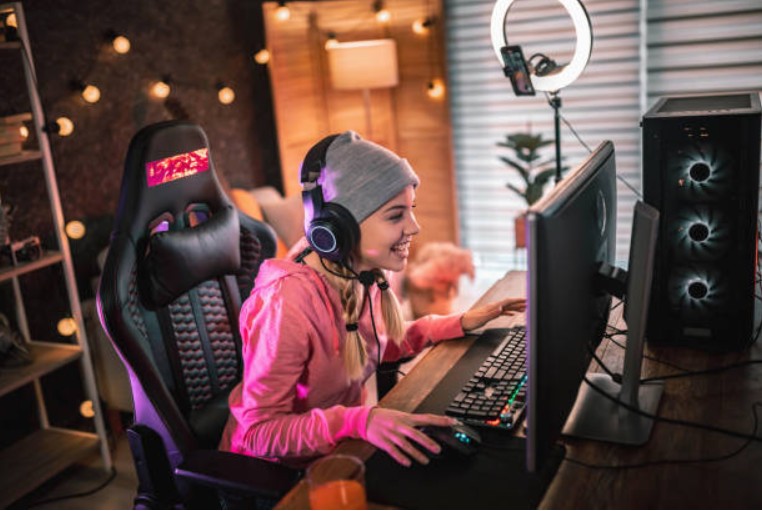
Mobile gaming has come a long way since its humble beginnings, evolving into a multi-billion-dollar industry that continues to captivate players worldwide. With the advent of 5G technology, the landscape of mobile gaming is undergoing a seismic shift. This next-generation network promises faster speeds, lower latency, and more reliable connections, unlocking exciting new possibilities for gamers and developers alike. Let’s dive into how 5G is supercharging the mobile gaming experience and why it’s such a game-changer.
What Is 5G and Why Does It Matter for Mobile Gaming?
At its core, 5G is the fifth generation of mobile network technology. It builds upon its predecessors by offering significantly faster download and upload speeds, along with a much lower latency (the delay between sending and receiving data). These improvements are crucial for mobile gaming, where real-time responsiveness and high-quality graphics are vital to the overall experience.
For mobile slot gamers, this means seamless connections and less lag. No more interruptions due to network issues, and no more waiting around for content to load. Whether you’re playing a battle royale game, engaging in an MMORPG, or enjoying a quick match of casual games, 5G makes all these experiences feel smooth and immersive.
Lightning-Fast Speeds for a Smoother Experience
One of the most significant advantages of 5G over previous generations is the speed. With 5G, download speeds can reach up to 10 Gbps, which is roughly 100 times faster than 4G. This means that game updates, downloadable content (DLC), and entire games can be installed in a fraction of the time it would take on 4G.
In practice, this means you’ll no longer need to wait hours to start playing the latest mobile game. Whether it’s a new release or a major update for your favorite game, 5G ensures that downloading and installing content is lightning-fast.
Instant Gameplay with Reduced Latency
Latency, often referred to as “ping,” is a critical factor in online gaming. High latency can cause lag, resulting in delayed actions, poor synchronization, and an overall frustrating experience. With 5G’s ultra-low latency, gamers can enjoy near-instantaneous responses during gameplay.
In games where split-second decisions can make all the difference—think competitive mobile games like PUBG Mobile or League of Legends: Wild Rift—this reduction in latency is a game-changer. Players can execute moves and commands without delay, making the experience much more enjoyable and competitive.
Cloud Gaming Becomes a Reality
Cloud gaming has been around for a while, but it has always been hindered by network limitations. With 5G, cloud gaming is finally becoming a viable option for mobile users. By allowing faster download speeds and lower latency, 5G enables seamless streaming of high-quality games directly to your mobile device, without the need for powerful hardware.
Services like Google Stadia, NVIDIA GeForce Now, and Xbox Cloud Gaming rely on 5G to stream high-fidelity slot gacor games to your phone or tablet. This means you can play console-quality games on your mobile device without needing a powerful gaming PC or console.
The Rise of Augmented Reality (AR) and Virtual Reality (VR) Gaming
5G isn’t just improving the speed and responsiveness of mobile games—it’s also enabling new forms of gaming altogether. Augmented Reality (AR) and Virtual Reality (VR) gaming are two areas that stand to benefit the most from 5G technology.
For AR gaming, where virtual objects are overlaid onto the real world through your device’s camera, 5G offers the fast data transfer and low latency needed for real-time interaction. Games like Pokémon GO and Harry Potter: Wizards Unite can become even more immersive, with more detailed interactions and less lag.
VR gaming, on the other hand, relies on heavy data usage and low latency to create a truly immersive experience. With 5G, VR can be taken to new heights. Imagine streaming an entire VR game in high-definition directly to your mobile device or headset, all while maintaining smooth and responsive gameplay.
5G and the Future of Mobile Gaming
As 5G networks continue to roll out globally, the potential for mobile gaming is practically limitless. Developers are already experimenting with new game mechanics and features that are only possible with 5G’s capabilities.
In the near future, expect to see more multiplayer mobile games with massive player bases, real-time strategy games, and more complex in-game environments. 5G allows for these large-scale, intricate experiences that were previously limited by the constraints of 4G.
Furthermore, the rise of mobile eSports could see a significant boost thanks to 5G. With faster and more stable connections, tournaments and competitions could be broadcast live in high-quality, allowing players and fans to enjoy a smoother, more immersive experience.
Conclusion
In conclusion, 5G is undeniably changing the face of mobile gaming. From faster download speeds to lower latency, this next-gen network is creating a more seamless, immersive, and exciting gaming experience. With its ability to power cloud gaming, support AR and VR, and ensure instant gameplay, 5G is truly supercharging the mobile gaming landscape. Whether you’re a casual gamer or a competitive player, 5G is the future of gaming, and it’s already here.
So, if you’re ready to level up your mobile gaming experience, it’s time to embrace 5G—the ultimate game-changer.