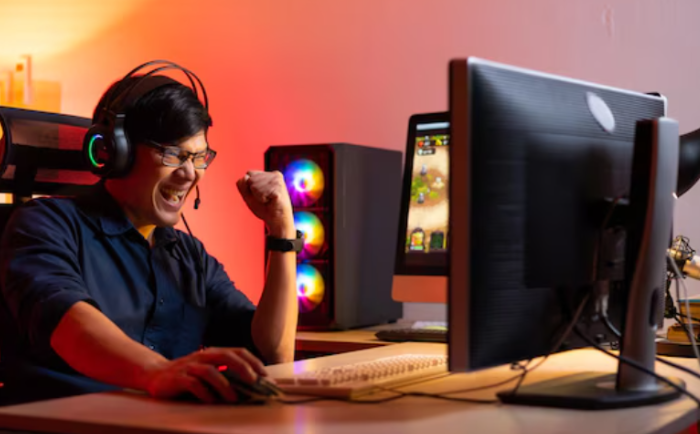
In today’s fast-paced world, problem-solving isn’t just a skill it’s a superpower. From managing deadlines to navigating complex social situations, the ability to analyze, adapt, and make sound decisions sets successful individuals apart. Most people assume that sharpening this skill requires books, classes, or life experience. Yet, a surprising and engaging alternative exists: online gaming. What many consider a leisure activity is, in fact, a powerful trainer for the brain, enhancing analytical thinking, strategic planning, and cognitive flexibility.
For beginners, the world of online gaming can feel overwhelming. Each game has unique rules, objectives, and challenges. Initially, mistakes are frequent, and success may seem elusive. But this process is precisely what fosters problem-solving abilities. Puzzle games, for example, challenge players to recognize patterns, test multiple strategies, and learn from errors. Every failure isn’t a defeat it’s feedback. Every success comes from careful evaluation and adjustment. From the perspective of someone just starting, gaming mirrors real-world learning: observe, experiment, reflect, and iterate. Even early on, players begin developing essential skills such as logical reasoning, attention to detail, and adaptive thinking.
Casual gamers, meanwhile, engage in a different type of cognitive exercise. Fast-paced games, including racing challenges, action arenas, or real-time multiplayer battles, require rapid decision-making. Players slot777 must process multiple streams of information, anticipate opponents’ moves, and make split-second judgments. This constant mental engagement strengthens cognitive agility, situational awareness, and quick-thinking skills. Over time, players develop the ability to evaluate options rapidly and execute decisions efficiently a skill that translates to real-life scenarios where timing and analysis matter equally.
Strategy games take problem-solving to a deeper level. Success in these games hinges not on reflexes alone, but on foresight, planning, and resource management. Players must weigh immediate actions against long-term goals, anticipate opponents’ strategies, and adjust their approach dynamically. This cultivates analytical thinking, critical reasoning, and a structured mindset. In essence, online strategy games function as cognitive laboratories, where players rehearse complex problem-solving processes that apply directly to professional challenges, personal projects, and academic tasks.
Online multiplayer games introduce yet another dimension: collaborative problem-solving. Many games require players to work as a team, combining skills, sharing resources, and coordinating strategies. Gamers learn to consider multiple perspectives, negotiate solutions, and adjust plans in real time. This social interaction fosters empathy, communication skills, and cooperative decision-making. Challenges that arise in these games mirror real-life team dynamics, teaching players how to navigate conflicts, leverage individual strengths, and achieve collective objectives.
Creativity is an additional benefit of online gaming. Not every game is linear; many encourage experimentation and exploration. Players often discover unconventional solutions, invent new strategies, and combine tools in ways that produce unexpected outcomes. This nurtures divergent thinking the ability to envision multiple solutions before selecting the most effective path. In life, challenges rarely have a single solution. Gamers trained to think creatively are better equipped to innovate, adapt, and find novel solutions under pressure.
Psychologically, gaming also strengthens resilience and emotional regulation. Losses, failed strategies, and unexpected obstacles are intrinsic to most games. Players learn to manage frustration, reflect on mistakes, and attempt again with improved approaches. This teaches patience, persistence, and a growth mindset. Over time, these experiences reinforce the understanding that failure is a learning opportunity rather than a setback a perspective that enhances real-world problem-solving and decision-making.
The science behind these effects is compelling. Research shows that online gaming can enhance cognitive flexibility, pattern recognition, probabilistic reasoning, and attention. Players server thailand frequently outperform non-gamers in tasks that demand adaptive thinking, rapid analysis, and multi-step problem-solving. The most remarkable aspect is that these benefits occur naturally within the context of play. Gamers are learning, practicing, and improving their cognitive skills while fully engaged and enjoying themselves a rare combination in traditional skill-building methods.
From a broader perspective, the evolution of a gamer’s thinking skills is layered. Beginners develop observation, pattern recognition, and trial-and-error reasoning. Casual players enhance speed of thinking, adaptability, and situational awareness. Strategic gamers refine planning, foresight, and analytical decision-making. Multiplayer participants cultivate collaboration, social reasoning, and real-time problem-solving. Across all levels, creativity, resilience, and critical thinking flourish, resulting in sharper minds capable of tackling complex challenges in any setting.
Ultimately, online gaming provides a low-risk environment for experimentation and mental growth. Players can test ideas, assess outcomes, and refine strategies without facing high-stakes consequences. This iterative process strengthens decision-making, encourages innovative thinking, and fosters a proactive mindset. Each puzzle solved, each battle won, and each strategic decision contributes to a more agile, capable, and resilient brain.
So, the next time you log into your favorite online game, remember: you’re doing more than playing. Every challenge you tackle, every strategy you refine, and every decision you execute is a workout for your mind. Online gaming trains the brain to think critically, analyze effectively, and adapt efficiently. Far from being a simple pastime, it’s a mental gym a place where sharper thinking, smarter strategies, and stronger problem-solving skills are cultivated.
Play, analyze, and conquer: the skills you build in the virtual world have real-world consequences. Each session spent navigating puzzles, strategizing against opponents, or collaborating with teammates strengthens your ability to tackle challenges, make sound decisions, and thrive under pressure. Gaming isn’t just entertainment it’s science-backed training for a sharper, more capable mind.